
7 Outbound Lead Generation Services Tips Every Business Should Know
Let’s be honest — waiting for customers to find you is a great strategy, right up until it isn’t.
SEO takes months. Referrals are unpredictable. Social media is a full-time job on its own. And at some point, most business owners hit a wall where they realise — okay, I need to go find my customers, not wait for them to come to me.
That’s exactly where outbound lead generation services come in. And if you’ve been googling this term, trying to figure out whether it’s the right move for your business, this article is going to save you a lot of time.
So, What Actually Are Outbound Lead Generation Services?
In simple words, it’s when someone goes out and finds potential customers for you, instead of waiting for them to come to you.
Inbound is when a customer finds your website, reads your blog, and fills out a form. Outbound is the opposite. You reach out first. You identify who your ideal customer is, find them, and make contact — through cold email, LinkedIn messages, cold calls, or a combination of all three.
Outbound lead generation services are agencies or teams that handle all of that on your behalf. They build the prospect lists, write the outreach messages, send them out, follow up, and hand you leads that have actually shown interest.
You focus on closing. They focus on finding.
Here’s the Thing Most People Get Wrong About Outbound
A lot of business owners hear “cold email” or “cold calling” and immediately think — ugh, that’s spam. That’s annoying. Nobody responds to that.
And look, if it’s done badly? They’re right. A generic “Hi [First Name], I came across your profile and thought we’d be a great fit” message that goes to 10,000 people at once — that’s spam. It doesn’t work, and it gives outbound a bad reputation.
But done properly? Outbound lead generation services are one of the most targeted, controllable ways to grow a pipeline.
Here’s the difference. Good outbound is specific. You pick a narrow, clearly defined target audience. You write messages that show you actually understand their problem. You reach out to the right person at the right company at the right time. And you follow up intelligently — not aggressively.
When that’s done well, people respond. Not everyone. But enough.
What Does a Good Outbound Lead Generation Service Actually Do?
Let me walk you through what a proper service actually looks like — because a lot of people don’t know what they’re paying for until they’re already in a contract.
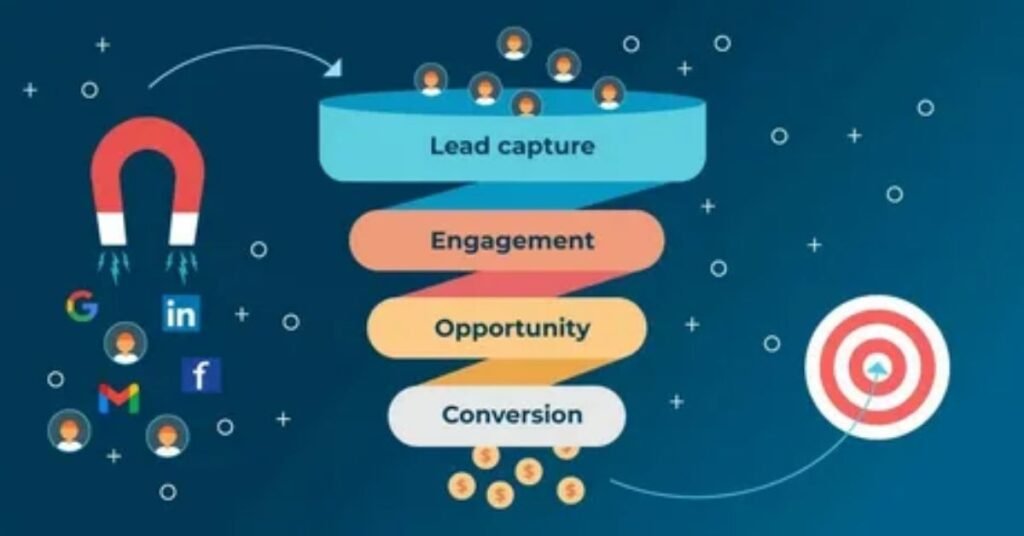
Building the prospect list. This is where it starts. A good team will work with you to define your ideal customer profile — the industry, company size, job title, geography, whatever makes someone a good fit. Then they build a list of real contacts that match that profile. This alone is a significant amount of work.
Writing the outreach copy. This matters more than most people realise. The message has to be short, relevant, personalised enough to feel human, and clear about why you’re reaching out. Bad copy kills good lists. Good copy can make even a mediocre list work.
Running the campaigns. Sending the emails, managing the LinkedIn outreach, tracking open rates, reply rates, and bounce rates. This is the operational side — keeping everything running cleanly so you don’t end up with deliverability problems or a damaged sender reputation.
Following up. Most responses don’t come from the first message. They come from follow-up two, three, or four. A good outbound lead generation service has a structured follow-up sequence that keeps things warm without becoming annoying.
Handing over qualified leads. This is the end goal. Not just names — actual people who have replied, shown interest, or agreed to a call. That’s what gets passed to your sales team.
What Channels Do Outbound Lead Generation Services Use?
Cold Email
Still one of the most effective outbound channels when done right. High volume, low cost, scalable. Works best for B2B businesses where you can identify decision-makers by job title and company.
The challenge with cold email is deliverability. If you’re not careful with domain setup, sending limits, and list hygiene, your emails end up in spam, and nobody ever sees them. A good service handles all of that infrastructure.
LinkedIn Outreach
More personal than email, slightly lower volume, but often higher response rates — especially for senior decision-makers. People are more likely to respond to a LinkedIn message than a cold email because the platform feels more professional and less spammy by default.
LinkedIn outreach is a core part of most outbound lead generation services right now, especially for B2B.
LinkedIn outreach is a core part of most outbound lead generation services right now, especially for B2B. And if you want to understand how tools like HubSpot can support and track all of this outreach in one place, this HubSpot Lead Generation Guide is genuinely worth reading.
Cold Calling
Yep, still exists. Still works in certain industries — financial services, recruitment, logistics, anything where a real conversation moves things faster than back-and-forth emails. Not every service offers this, but some specialist outbound teams are built around it.
Multi-Channel Sequences
The best results usually come from combining channels. Email first, LinkedIn follow-up, maybe a call if there’s been engagement. Hitting someone on two or three channels in a coordinated way — without being overwhelming — significantly improves response rates.
When Does It Actually Make Sense to Hire Outbound Lead Generation Services?
Let me give you some real scenarios.
You’re a B2B SaaS company with a specific target market — say, HR directors at mid-size companies. You know exactly who you want to talk to. You just don’t have the time or team to reach out to 500 of them every month. Outbound lead generation services make total sense here.
You’re a consultancy or agency that just landed two big clients and suddenly doesn’t have time to do business development anymore. You need someone to keep the pipeline warm while you deliver. Again, this is exactly what these services exist for.
You’re launching a new product or service, and you want to test messaging quickly. Outbound is actually great for this. You can run small campaigns, see what resonates, and refine your positioning faster than waiting for organic traffic to tell you.
Where doesn’t it make sense? If you’re B2C selling something low-ticket. If your target market is too broad to define properly. Or if you’re not ready to handle the leads that come in, because outbound lead generation services can fill your calendar, but someone still has to close those meetings.
What Should You Expect in Terms of Results?
Here’s the honest answer — it depends on your industry, your offer, and how well-defined your target audience is.
A realistic benchmark for cold email in B2B is somewhere around a 2–5% positive reply rate. That means for every 100 emails sent, 2 to 5 people respond with genuine interest. That sounds low until you realise a good campaign might be sending 1,000+ emails a month — which means 20 to 50 warm conversations every month from outbound alone.
For LinkedIn, response rates are often slightly higher, but volume is lower. Multi-channel campaigns generally outperform single-channel.
The point is — outbound lead generation services are not magic. They’re a numbers game run intelligently. But when the numbers are right and the targeting is tight, the results are very real.
How to Choose the Right Outbound Lead Generation Service
A few practical things to look for before signing anything.
Do they specialise in your industry or similar ones? Generic outbound agencies exist, but specialists usually get better results because they understand the language, the objections, and the buying process.
Can they show you real examples of campaigns they’ve run and results they’ve gotten? Anyone can promise leads. Ask for case studies or references.
What’s included in the pricing? List building, copywriting, sending infrastructure, reporting — make sure you know exactly what you’re getting and what happens to the leads when they come in.
Do they own your data and campaigns, or do you? This matters more than people think. If you end the relationship, you want to keep the prospect lists and the campaign history.
Conclusion
Here’s my honest take after all of this. Outbound lead generation services are genuinely valuable for the right businesses — specifically B2B companies with a clear target market, a decent offer, and a sales process ready to handle incoming conversations.
They’re not a shortcut. They’re not a replacement for having a good product or knowing your customer. But when those things are in place, outbound lead generation services can turn a quiet pipeline into a consistently active one — faster than most other channels will.
If you’ve been waiting for customers to come to you and it’s not moving fast enough, maybe it’s time to go find them instead.
FAQs
What are outbound lead generation services?
Their services are a team that proactively reaches out to potential customers on your behalf through channels like cold email, LinkedIn, and phone — finding and qualifying leads so you can focus on closing deals.
Are outbound lead generation services worth it for small businesses?
They can be, if your target market is clearly defined and your average deal value is high enough to justify the investment. For low-ticket or very broad B2C businesses, they’re usually less cost-effective.
How long does it take to see results from outbound lead generation?
Most campaigns start showing results within 4 to 8 weeks once the list is built, the copy is tested, and the sequences are running. Initial results are often used to refine the approach before scaling up.
What’s the difference between inbound and outbound lead generation?
Inbound is when customers find you — through search, content, or referrals. Outbound is when you go find them. Both have a place, but outbound is faster to start and easier to control in terms of targeting.
How much do outbound lead generation services typically cost?
It varies widely — from a few hundred dollars a month for basic email campaigns to several thousand for full-service multi-channel outbound with dedicated SDRs. The right budget depends on your target market, volume needs, and expected deal size.